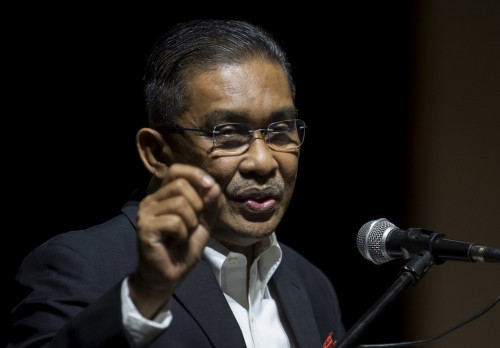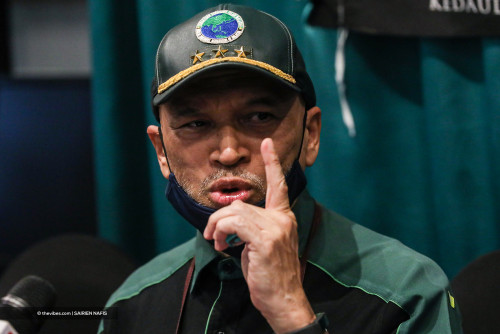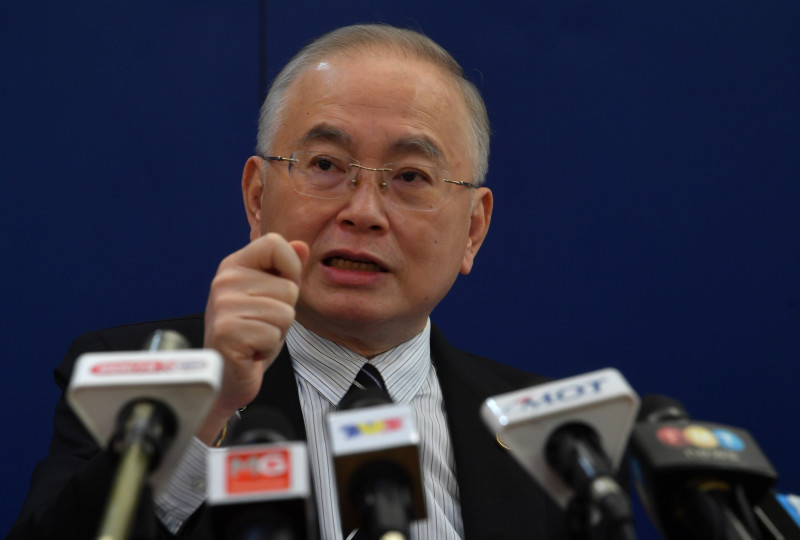

PUTRAJAYA – The Transport Ministry has allocated nearly RM1.3 billion to improve the safety and services of the Light Rail Transit (LRT) line, following the collision last year and a string of recent incidents, said Datuk Seri Wee Ka Siong.
The minister said of the RM1.3 billion, RM450 million will be allocated for at least 23 initiatives that came about after the unprecedented Kelana Jaya line collision on May 24 last year.
He said the remaining RM800 million is primarily for the level four maintenance, repair, and overhaul of the trains, especially for the ageing Bombardier 818 Series of coaches that are approaching their mid-life cycle.
“(LRT operator) Prasarana (Malaysia Bhd) must provision RM800 million in total because they (818 trains) have been operating between 14 and 15 years.
“This is to ensure that the lifespan of the trains is extended. It’s a mid-life refurbishment of 28 trains which have four carriages each.”
The minister said this during a press conference here on the initiatives undertaken by Prasarana following the collision that took place between the KLCC and Kg Baru LRT stations last year, involving 193 passengers.
The crash, the line’s first major accident since commencing operations in 1998, had left at least eight people critically injured. No casualties were reported.
Wee said of the 23 initiatives, five are being carried out on a short-term basis of one to three months, 11 initiatives were medium-term works that took three to six months, while the remaining took more than six months to accomplish.
Among others, the initiatives included the installation of improved location markers and signages, the evaluation of the reliability, availability, maintainability, and safety aspects of train systems, rails, and other assets; and the installation of train electronic detection systems that can reveal exact locations of trains during instances of “time out”.
Additionally, Wee said there were upgrades for the communications systems to become fully digital by the end of Q4 2022.
On service disruptions in recent months, Wee said a total of 38 incidents of emergency brake deployment were recorded between April 1 and May 5.
From the data gathered, he said 47% were attributed to tachometer issues, 32% were due to electronic units, 6% were caused by antennas, and 15% were due to other reasons.
“(Prasarana subsidiary) Rapid Rail has launched a special evaluation programme to inspect the said components.
“Apart from replacing broken components, dynamic tests will be carried out to prevent recurrence of similar incidents.”
Wee said 14% has been completed and the programme will conclude in August. – The Vibes, May 25, 2022